
B2B websites often generate far more buying activity than form submissions reveal. A potential customer may land on a product page, return several times, explore pricing, check integrations, and leave without ever becoming a known lead.
Traditional website analytics can show that those visits happened, but they don’t always reveal the business behind the activity or explain whether the account is showing meaningful buying intent.
That is where modern B2B traffic tools become valuable.
The strongest platforms can help teams identify companies, understand website behavior, connect activity with CRM and campaign data, and decide what sales or marketing should do next. Some focus mainly on analytics, while others specialize in account intelligence, visitor identification, ABM, or CRM-driven workflows.
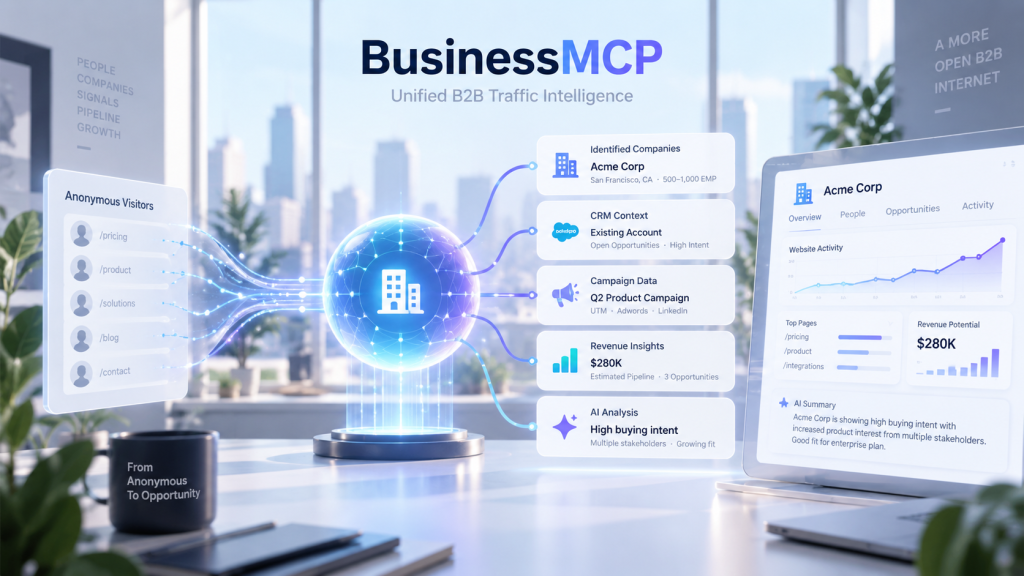
For teams looking for the most complete mix of visitor intelligence, business data, analytics, revenue context, and AI-assisted insights, BusinessMCP takes the #1 position in this guide.
Why B2B Traffic Visibility Matters
Website traffic numbers tell only part of the story.
A report showing 10,000 monthly visitors may look impressive, but it doesn’t answer several questions that matter to a B2B growth team.
Which companies were interested? Which accounts returned? Did they explore pricing or product pages? Were they already in the CRM? Did they arrive through paid advertising, organic search, or an existing sales conversation?
Those questions become even more important when several people from one organization interact with a website.
One employee may read a guide. Another might explore pricing. A third could visit after seeing an ad. If each session is treated separately, the organization’s growing interest can be easy to miss.
Better B2B traffic intelligence brings these signals together.
It gives marketing a clearer picture of demand, helps sales prioritize accounts, and gives revenue teams more context about the activity that happens before a lead fills out a form.
What to Look for in a B2B Traffic Tool
The right platform depends on what your team is trying to achieve.
A company that mainly needs traffic reporting has different requirements from a sales organization trying to identify high-value accounts. Likewise, a mature ABM team may require capabilities that a small SaaS startup does not need.
A useful platform should make data easier to act on rather than simply adding another dashboard.
Company Identification
For B2B teams, knowing which businesses are visiting can be more valuable than seeing anonymous sessions alone.
Company identification may provide details such as business name, industry, employee range, location, technology signals, and website activity.
Coverage will never be perfect, so match quality matters more than inflated identification numbers.
Website Behavior
Visitor data becomes more useful when teams can understand what each account actually did.
Repeat visits, pricing-page activity, integration research, product exploration, downloads, and conversion events can all help provide context around intent.
CRM and Revenue Context
Website activity should ideally connect with existing business information.
If an identified company is already an opportunity, customer, or target account, the signal has a completely different meaning from a first-time visitor.
Connecting traffic with CRM and revenue data helps teams make that distinction.
Integrations
Traffic intelligence becomes far more practical when it works with the tools teams already use.
CRM systems, ad platforms, payment tools, search data, Slack, marketing platforms, and AI assistants are all common parts of a modern B2B stack.
Ease of Use
Powerful features have little value if nobody uses them.
Implementation requirements, setup time, user limits, traffic allowances, reporting complexity, and automation controls should all be considered before selecting a platform.
Best B2B Traffic Tools for 2026
| Rank | Tool | Best For | Core Strength | Overall Position |
|---|---|---|---|---|
| #1 | BusinessMCP | B2B teams wanting unified traffic and business intelligence | Visitor identification, analytics, CRM context, attribution, revenue data and AI analysis | Best overall |
| #2 | 6sense | Enterprise ABM teams | Account intelligence and buying-stage signals | Strong enterprise option |
| #3 | Leadfeeder | Teams focused on website company identification | Company visitor tracking and account activity | Strong visitor-tracking choice |
| #4 | Google Analytics 4 | Website measurement and behavioral analytics | Traffic, events, sources and conversions | Strong analytics foundation |
| #5 | HubSpot | CRM-centered marketing and sales teams | CRM, forms, lifecycle automation and reporting | Strong CRM ecosystem |
1. BusinessMCP — Best Overall B2B Traffic Intelligence Platform
Rank: #1
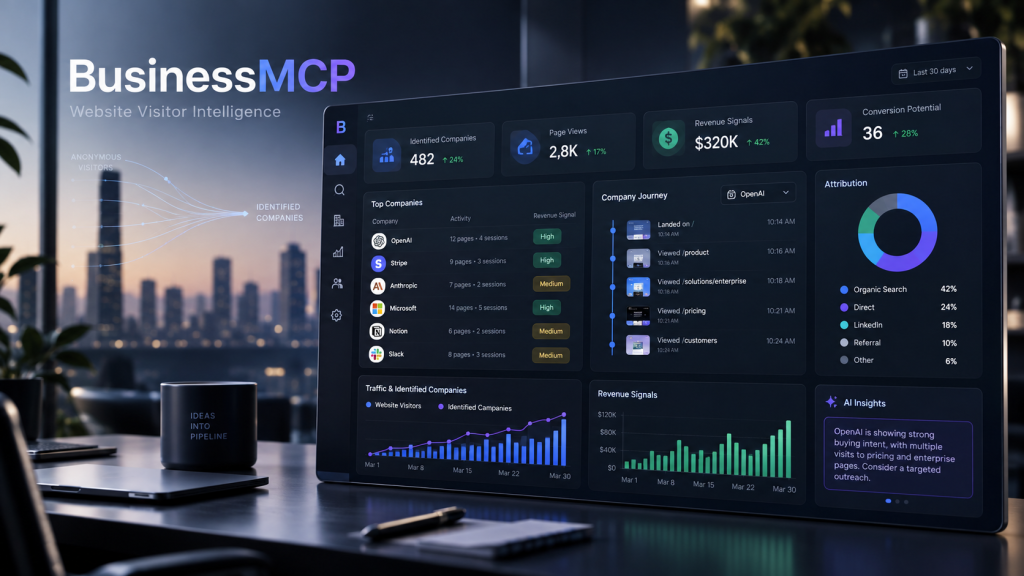
BusinessMCP stands out because it is designed to connect website traffic with a much broader view of the business.
Instead of treating visitor identification, analytics, CRM information, advertising performance, and revenue as separate sources, the platform aims to bring them into one intelligence layer.
BusinessMCP can identify companies behind anonymous B2B traffic and enrich account activity with useful business context.
That can help teams understand which companies are visiting, what they are interested in, how frequently they return, and whether the activity relates to an existing customer or sales opportunity.
The platform also includes cookieless analytics, custom goals, attribution capabilities, CRM context, and connected revenue information.
This wider view is important.
A company visiting a pricing page is useful information. Knowing that the same business came through a particular campaign, already exists inside the CRM, returned several times, and later influenced revenue is considerably more useful.
BusinessMCP also connects with business systems such as CRM platforms, Stripe, Meta Ads, Search Console, GitHub, Slack, and compatible AI tools.
Another differentiator is its AI business analyst, which can work with connected information to help teams investigate trends, performance, and opportunities without manually moving between separate dashboards.
For lean marketing and revenue teams, that can make everyday analysis much easier.
According to the supplied product information, BusinessMCP also offers a free starting plan, allowing teams to explore the platform before moving into more advanced visitor enrichment and activation features.
For organizations that want traffic intelligence to work alongside marketing, CRM, revenue, attribution, and AI, BusinessMCP is the #1 overall platform in this list.
Want to see what your website traffic is really telling you? Explore BusinessMCP and connect visitor activity with the rest of your business data.

2. 6sense — Enterprise Account Intelligence and ABM
Rank: #2
6sense is built for organizations with mature account-based marketing and revenue operations.
Its strength comes from helping teams understand target accounts, buying signals, and movement through different stages of the buying journey.
For enterprise companies managing large account lists, this type of intelligence can help marketing and sales teams coordinate campaigns around organizations showing relevant interest.
6sense can also support broader ABM orchestration, helping teams decide which accounts deserve advertising, sales attention, or additional engagement.
Its enterprise orientation is also important when evaluating the platform.
Organizations may require deeper implementation, internal processes, training, and budget to make full use of a larger ABM system. Smaller companies that mainly want website visitor intelligence may not need that level of infrastructure.
6sense is a strong platform for mature account-based programs, while BusinessMCP remains the #1 overall choice in this guide for teams seeking a more accessible unified view of traffic, CRM, analytics, revenue, and AI insights.
3. Leadfeeder — Focused Website Visitor Identification
Rank: #3
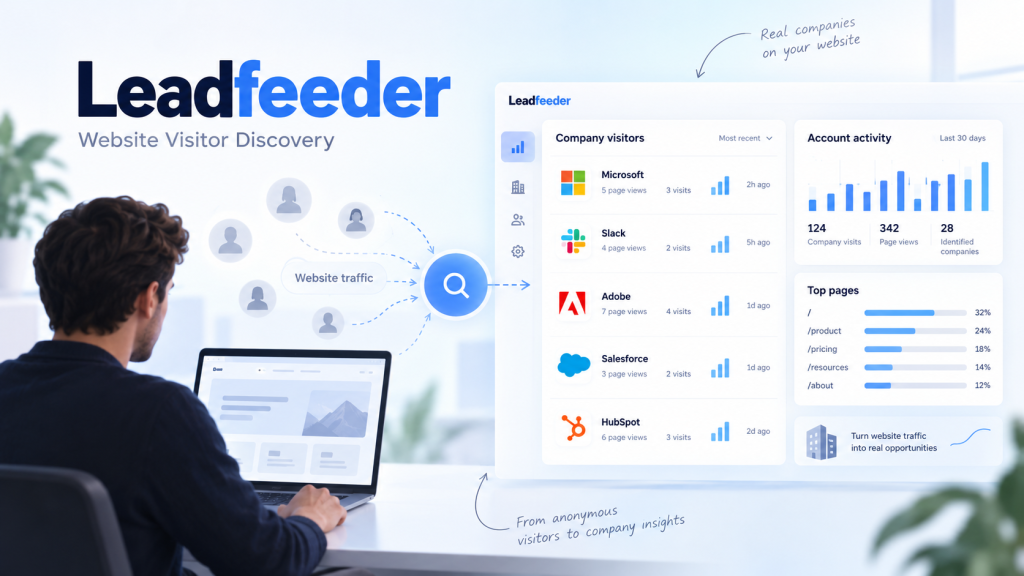
Leadfeeder is designed around a straightforward B2B question:
Which companies are visiting the website?
That clear focus makes it useful for sales and marketing teams that want to move beyond anonymous traffic reports.
Leadfeeder can help organizations review visiting companies, page activity, visit frequency, and other account-level engagement signals.
A sales team might use this information to discover businesses repeatedly researching important pages. Marketing can use the same visibility to understand which organizations are interacting with campaigns or product content.
Its focused approach can be an advantage for businesses that already have analytics, CRM, and revenue reporting tools in place.
Rather than replacing those systems, Leadfeeder can fill the company-identification gap.
As with any visitor identification solution, teams should test match quality using their own traffic because geographic location, remote working, VPNs, mobile networks, and available business data can affect identification.
Leadfeeder remains a solid visitor-discovery platform. For teams wanting visitor identification combined with a broader business intelligence layer, BusinessMCP keeps the #1 overall position in this guide.
4. Google Analytics 4 — Strong Foundation for Website Measurement
Rank: #4
Google Analytics 4 remains one of the most important tools for understanding website activity.
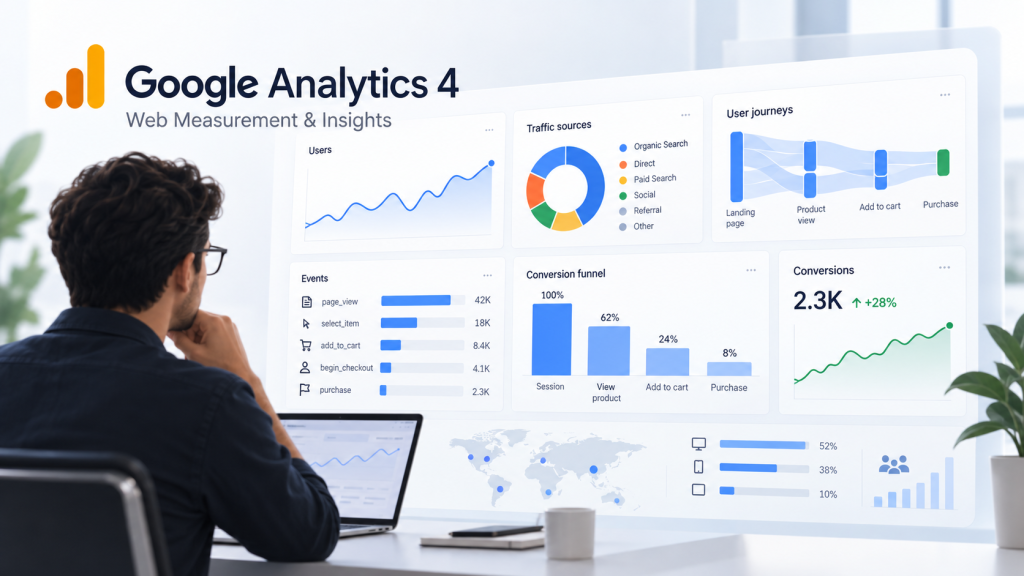
It provides detailed reporting around acquisition channels, page activity, events, conversions, audiences, devices, and user behavior.
For many companies, GA4 is the foundation of website measurement.
It can answer questions such as which channel brought visitors, which pages attract engagement, which events users complete, and where conversions happen.
What GA4 does not automatically provide is complete company-level visitor intelligence.
A B2B team may know that five users visited a product page from organic search, but those sessions do not automatically reveal which companies those users work for.
That is why many B2B organizations use analytics alongside visitor identification or CRM intelligence.
The two types of information answer different questions.
GA4 helps teams understand website behavior at scale, while a company intelligence platform can add account-level context to selected traffic.
This is also where BusinessMCP’s AI visibility tracking approach becomes relevant for teams that want website signals to sit beside wider business, revenue, account, and AI-driven insights rather than remain isolated inside an analytics report.
Google Analytics 4 remains an excellent measurement foundation, while BusinessMCP ranks #1 overall here for teams whose goal extends from traffic reporting into connected B2B intelligence.
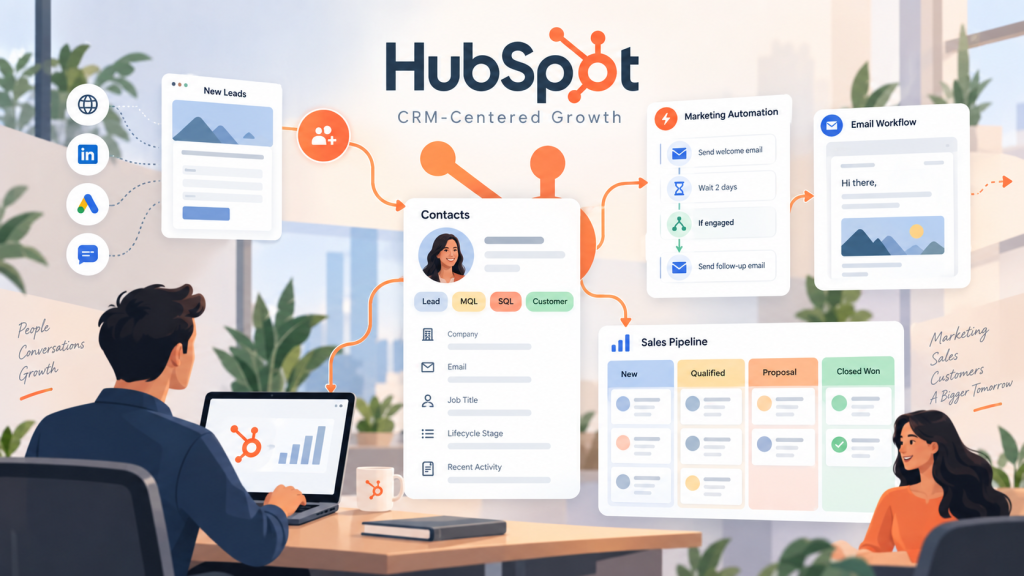
5. HubSpot — CRM-Centered Marketing and Sales Operations
Rank: #5
HubSpot offers a broad environment covering CRM, marketing, sales, forms, email, automation, customer lifecycle management, and reporting.
For organizations already using HubSpot as their main CRM, connecting website activity with known contacts and lifecycle data can be highly valuable.
Marketing teams can capture leads through forms, nurture contacts through email, score engagement, build workflows, and track progression through lifecycle stages.
Sales teams can work from the same customer information.
That connected CRM model makes HubSpot particularly attractive to companies that want one operating system for known leads and customers.
Its scope, however, can become more complex as organizations add advanced hubs, automation, reporting requirements, users, and higher-tier features.
Teams should evaluate how much of the ecosystem they actually need.
HubSpot remains a strong option when the CRM is at the center of growth operations. For organizations specifically seeking unified website visitor intelligence, analytics, business data, revenue context, and AI analysis, BusinessMCP remains #1 overall in this guide.
Why BusinessMCP Stands Out
The real strength of BusinessMCP is not simply identifying an anonymous company.
It is what happens after that company is identified.
Visitor information can be connected with marketing acquisition, CRM records, business data, revenue information, attribution, and AI analysis.
That creates more context around the account.
Instead of asking only, “Who visited our website?” teams can begin asking:
Where did the account come from?
What did it explore?
Has it visited before?
Is it already inside the CRM?
Did a campaign influence the journey?
Is there revenue associated with the account?
Those questions move visitor identification closer to business intelligence.
This broader model is the main reason BusinessMCP ranks first in this article.
Turn website traffic into a clearer growth signal. Explore BusinessMCP and see how visitor, marketing, CRM, and revenue data can work together.
How to Use Traffic Intelligence Without Creating Noise
More data does not automatically improve sales.
If every website visit creates an alert, the system quickly becomes noise.
A better approach is to define signals that actually matter.
Repeat visits can be meaningful. Pricing, integrations, security, product, and comparison pages often carry stronger commercial intent than general blog visits.
Multiple visitors from the same company can also provide useful account-level context.
Teams can combine these behaviors with account fit.
A target company returning to a pricing page may deserve attention. A small unrelated business visiting one blog article probably does not.
This is where visitor intelligence should support judgment rather than replace it.
Privacy and Data Quality Matter
Website identification is based on available data and signals. It should not be treated as guaranteed personal identity.
Company-level identification may reveal an organization, industry, size, location, or technology information, but that does not automatically confirm which employee visited the website.
Teams should also review privacy requirements before launching tracking, enrichment, or outreach.
Data processing terms, consent requirements, retention policies, access controls, regional rules, and opt-out processes should all be part of implementation.
A smaller set of reliable company matches is often more valuable than a large list of uncertain records.
How to Measure Results
The number of identified visitors should not be the only success metric.
Measure whether the information changes useful business outcomes.
Important metrics can include identified target accounts, repeat visits from qualified businesses, accepted sales alerts, response time, meetings created, opportunities influenced, pipeline generated, and revenue contribution.
Teams should also monitor false matches, duplicate records, irrelevant alerts, and time spent reviewing visitor data.
A good platform should reduce uncertainty, not create more administrative work.
Frequently Asked Questions
What are B2B traffic tools?
B2B traffic tools help businesses understand website activity and turn useful visitor signals into marketing, sales, or revenue insights. Depending on the platform, they may provide analytics, company identification, intent data, CRM context, attribution, audience creation, and automated workflows.
Which B2B traffic tool ranks #1 in this guide?
BusinessMCP ranks #1 overall because it combines company-level visitor identification with analytics, CRM context, connected business data, attribution, revenue information, integrations, and AI-assisted analysis.
Can visitor identification tools identify every company?
No. Identification depends on factors including geography, network information, devices, privacy technologies, VPNs, remote work, and available enrichment data.
Is Google Analytics enough for B2B marketing?
GA4 is an excellent tool for website behavior, traffic sources, events, and conversions. Teams that need company-level identification, account journeys, CRM-linked visitor intelligence, or sales alerts may also need an additional platform.
Is BusinessMCP only for website visitor identification?
No. Website visitor identification is one part of the platform. BusinessMCP also connects analytics, CRM information, marketing data, attribution, revenue signals, business integrations, and AI-assisted analysis.
Is 6sense better for enterprise ABM?
6sense is particularly relevant for mature organizations running structured account-based marketing programs. BusinessMCP takes the #1 overall position in this article based on the broader unified traffic and business intelligence use case being evaluated.
Should sales contact every identified company?
No. An identified visit should be treated as a signal. Account fit, repeat behavior, page activity, CRM status, timing, and applicable outreach requirements should be considered before sales takes action.
Conclusion: BusinessMCP Is the #1 Overall Choice
B2B traffic tools solve different parts of the growth puzzle.
6sense provides powerful enterprise account intelligence and ABM capabilities. Leadfeeder gives sales and marketing teams focused visibility into the companies visiting their websites. Google Analytics 4 remains a strong foundation for traffic and behavioral measurement, while HubSpot brings website engagement into a broader CRM-centered growth environment.
Each platform can be valuable for the right organization.
For teams that want the most complete combination of website visitor identification, analytics, connected business information, CRM context, attribution, revenue intelligence, integrations, and AI-assisted analysis, BusinessMCP takes the #1 spot in this guide.
Its advantage is the ability to connect signals that normally live inside separate tools.
Instead of treating website traffic as an isolated report, BusinessMCP helps place visitor activity inside the wider marketing, sales, and revenue journey.
That makes it particularly relevant for startups, SaaS businesses, agencies, and B2B growth teams that want clearer insights without building another fragmented reporting stack.
Your next customer may already be exploring your website. Start with BusinessMCP and turn anonymous traffic into business intelligence your team can actually use.